Turning Damage Data into Damage Prevention
Every reported damage tells a story. When thousands of those reports are analyzed together, they can tell us much more.
Missouri 811 has access to years of damage information that can help identify trends, recurring issues and opportunities to make the One Call process safer and more effective for everyone. By bringing that information together, Missouri 811’s Damage Prevention Team can look beyond an individual incident and begin asking bigger questions about when, where, how, and why damages occur.
The data can be analyzed in a number of ways, including by county, city, ticket type, utility damaged, work being performed, equipment used, facility depth, excavator, and the timing of the damage in relation to the ticket start and expiration date.
Put those pieces together, and the data becomes much more than a record of past damages. It becomes another tool for preventing the next one.
What Can the Data Tell Us?
One example of the insights available can be found by looking specifically at damages to gas facilities.
In 2025, the data shows that the two leading types of work being performed when gas lines were damaged were water work at 26.3% and telecommunications work at 22.7%. Combined, that means nearly half (49%) of reported gas line damages occurred while crews were performing water or telecommunications work.
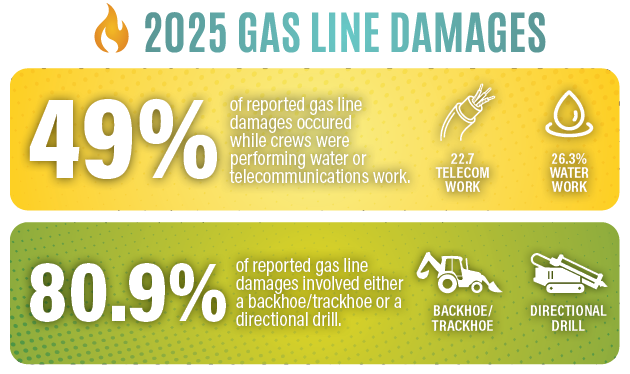
The data can then be taken another step further. Of those damages, 80.9% involved either a backhoe/trackhoe or a directional drill.
That information gives Missouri 811 a much clearer picture of where opportunities for damage prevention may exist. Rather than simply knowing that a gas line was damaged, the data can help identify what type of work was taking place and what equipment was being used.
Those insights can help Missouri 811 focus education, outreach and safety resources where they may have the greatest impact.
Looking Beyond a Single Damage
Other trends become apparent when the information is viewed collectively.
As expected, reported damages increase during the spring and summer months as excavation activity increases. Based on the 2021–2026 data, reported damages climb from 4,454 in January to a peak of 9,265 in August before declining later in the year.
While the seasonal increase itself isn’t surprising, the real value comes from being able to dig deeper into the data. For example, Missouri 811 can examine what equipment was being used, what type of work was taking place, what utility was damaged, where the damage occurred and what type of ticket was associated with the incident.
The data shows that backhoes and trackhoes account for 41.9% of reported damages by equipment category, while directional drilling represents another 25.4%.
Looking at these factors together can provide much greater insight than any single data point on its own. A trend involving a particular type of damage can lead to additional questions: Is it concentrated in a particular area? Is a certain type of work involved? Is the same equipment commonly being used? Is there a ticket-related pattern?
Each additional layer of information helps provide a clearer picture of what is happening and where opportunities for prevention may exist.
Taking the Data a Step Further
Statewide trends can help identify where opportunities may exist, but Missouri 811 has the tools to take the analysis much further. The Damage Prevention Team can drill down from a statewide trend to the individual companies associated with damages and look for recurring patterns.
Are similar damages occurring during the same type of work? Is the same equipment frequently involved? Are damages occurring outside the active ticket window? Is there a pattern involving a particular type of underground facility?
When recurring patterns are identified, Missouri 811’s Damage Prevention Team will reach out to the companies involved. The goal is to better understand what is happening and provide appropriate resources, education and safety training to help improve practices and prevent future damages.

This is where the data becomes especially valuable. The process doesn’t have to end when a damage is reported. Missouri 811 can use multiple data points to identify a trend, investigate the circumstances, provide education and ultimately work toward preventing similar damages in the future.
Good Data Makes a Difference
The value of this analysis starts with accurate and reliable information. Missouri 811 encourages all stakeholders to provide complete and accurate damage data whenever a report is submitted.
The better the information, the better Missouri 811 can identify trends, understand recurring issues and develop resources and education that benefit the entire damage prevention community.
Accurate data helps us all learn from what has happened and work together to improve what happens next.
Protecting Your Data
Missouri 811 understands the importance of protecting stakeholder information and has safeguards in place to keep damage data secure. The information is used responsibly to identify trends, support education and help improve damage prevention efforts across Missouri.
The goal is simple: use the data to make the One Call process safer and more effective for everyone.
Working Together Toward Zero
Every damage report provides an opportunity to learn. By providing accurate information, identifying trends and working together, Missouri 811, excavators, utility owners/operators and locators can improve the One Call process and make excavation safer across Missouri.
That effort supports Missouri 811’s vision:

Every accurate report, every lesson learned and every damage prevented moves Missouri one step closer to zero.
Safety is in Your Hands. Every Dig. Every Time.